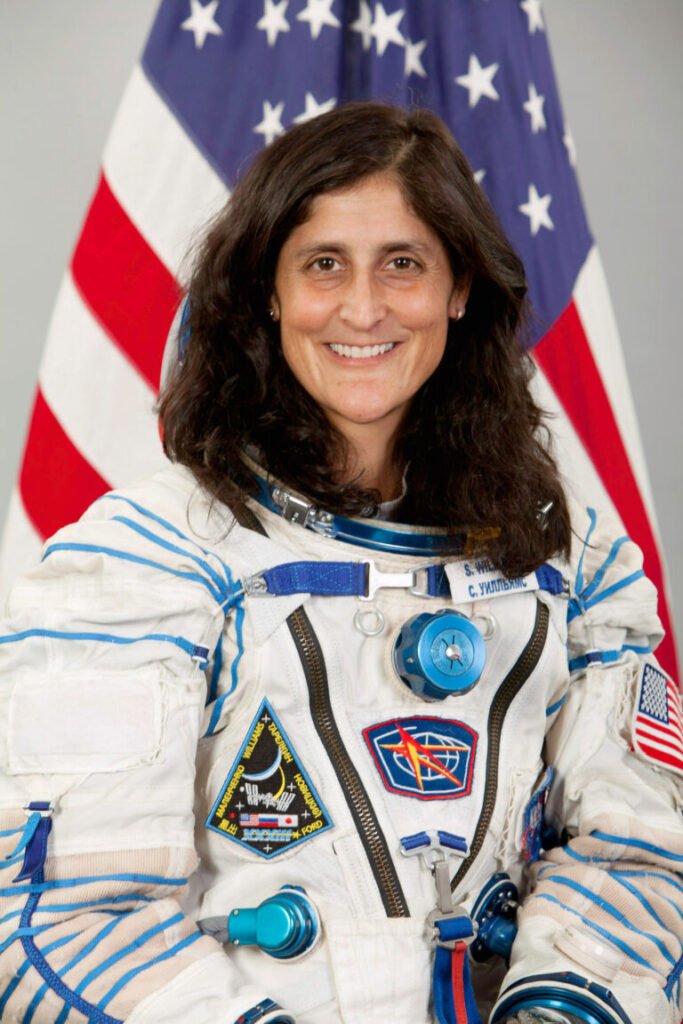
Sunita L. Williams, the Indian‑origin NASA astronaut who spent more than 600 days in orbit and completed three International Space Station (ISS) expeditions, officially hung up her space boots on 27 December 2025, ending a 27‑year career with the agency . Her retirement, announced by NASA on 20 January 2026, marks the close of an era for human spaceflight and leaves a legacy of record‑setting achievements that will inspire generations to come.
Williams first launched to the ISS on 9 December 2006 aboard Space Shuttle Discovery (STS‑116) as a flight engineer for Expedition 14/15, where she logged four spacewalks and set a then‑record for female EVA time . She returned to space in 2012 on Soyuz TMA‑05M for Expedition 32/33, serving as commander of the station and adding three more spacewalks to her tally . Her final mission, the 2024 Boeing Starliner Crew Flight Test, was intended as an eight‑day shakedown but turned into a nine‑month stay after thruster and helium‑leak issues forced NASA to keep her and crewmate Butch Wilmore aboard the ISS until March 2025 . By the time she returned, Williams had accumulated 608 days in space—the second‑highest total for any NASA astronaut—and nine spacewalks totaling 62 hours 6 minutes, the most EVA time ever recorded by a woman .
Beyond the numbers, Williams broke new ground for women in space. She was the first person to run a marathon on a treadmill aboard the ISS in 2007 and, in 2012, the first to complete a simulated triathlon in microgravity . Her leadership as ISS commander (Expedition 33 and later Expedition 72) demonstrated that women can hold top operational roles on orbital platforms, paving the way for future female commanders .
NASA Administrator Jared Isaacman called Williams “a trailblazer in human spaceflight, shaping the future of exploration through her leadership aboard the space station and paving the way for commercial missions to low Earth orbit” . Her work also laid groundwork for Artemis lunar missions and eventual Mars voyages, as she helped test new technologies and train astronauts in extreme environments, including NEEMO underwater missions .
As she steps into retirement, Williams plans to stay connected to the space community, mentoring young explorers and advocating for STEM education, especially for girls and under‑represented groups. Her story—from a Navy test‑pilot to a record‑shattering astronaut—remains a powerful reminder that perseverance and curiosity can push humanity beyond its limits.